und dann taucht Martha auf, 2026
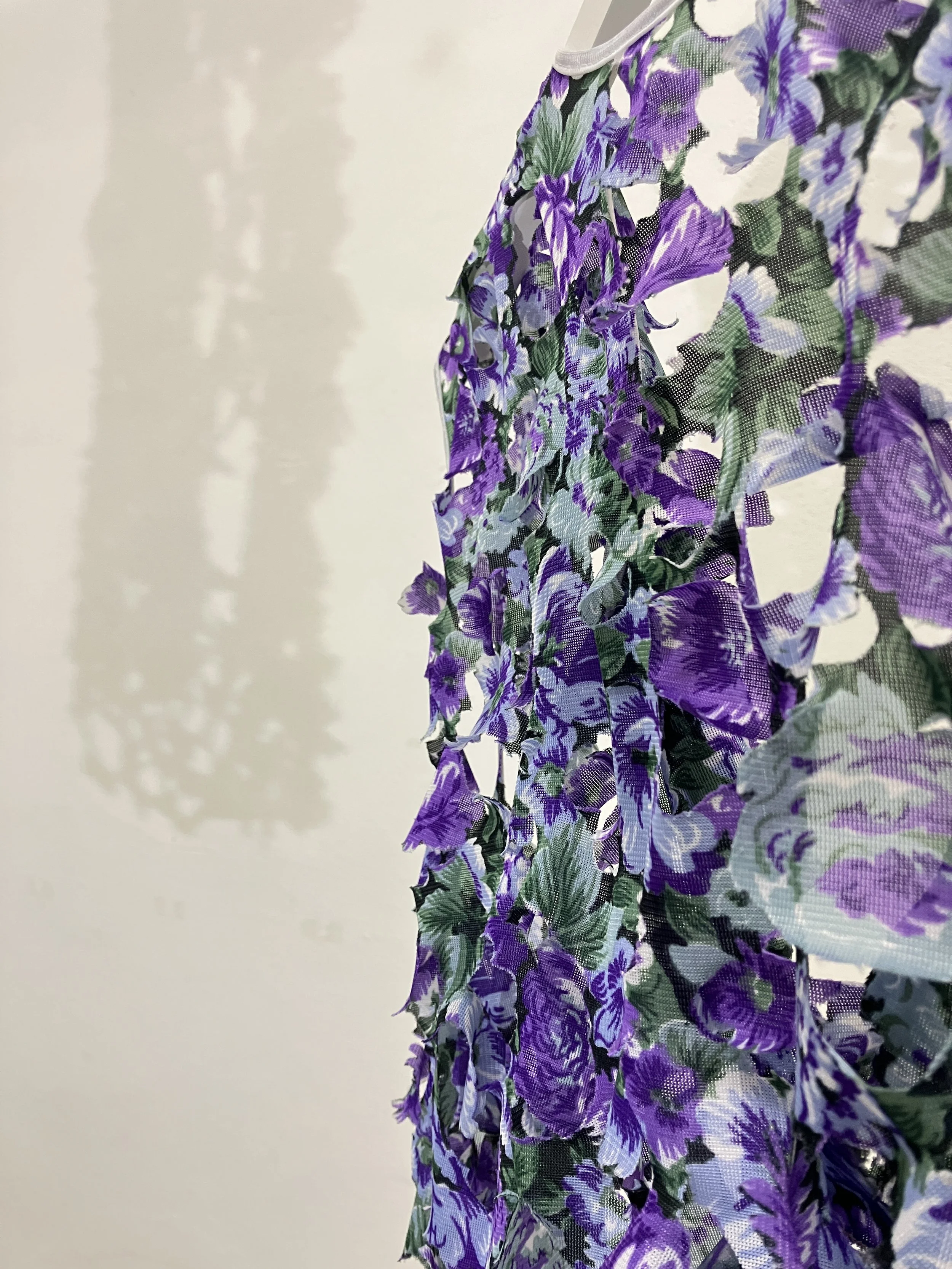
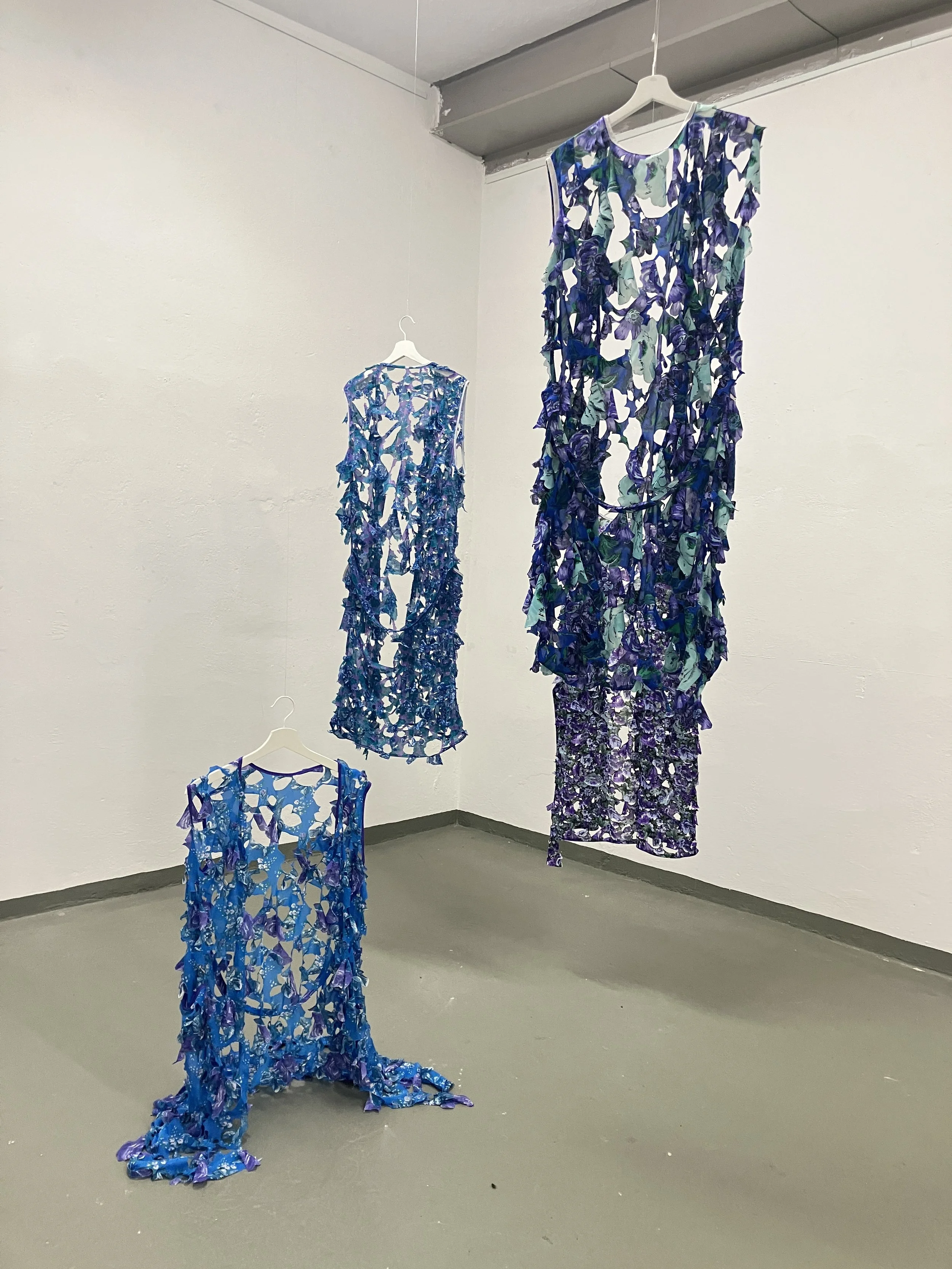
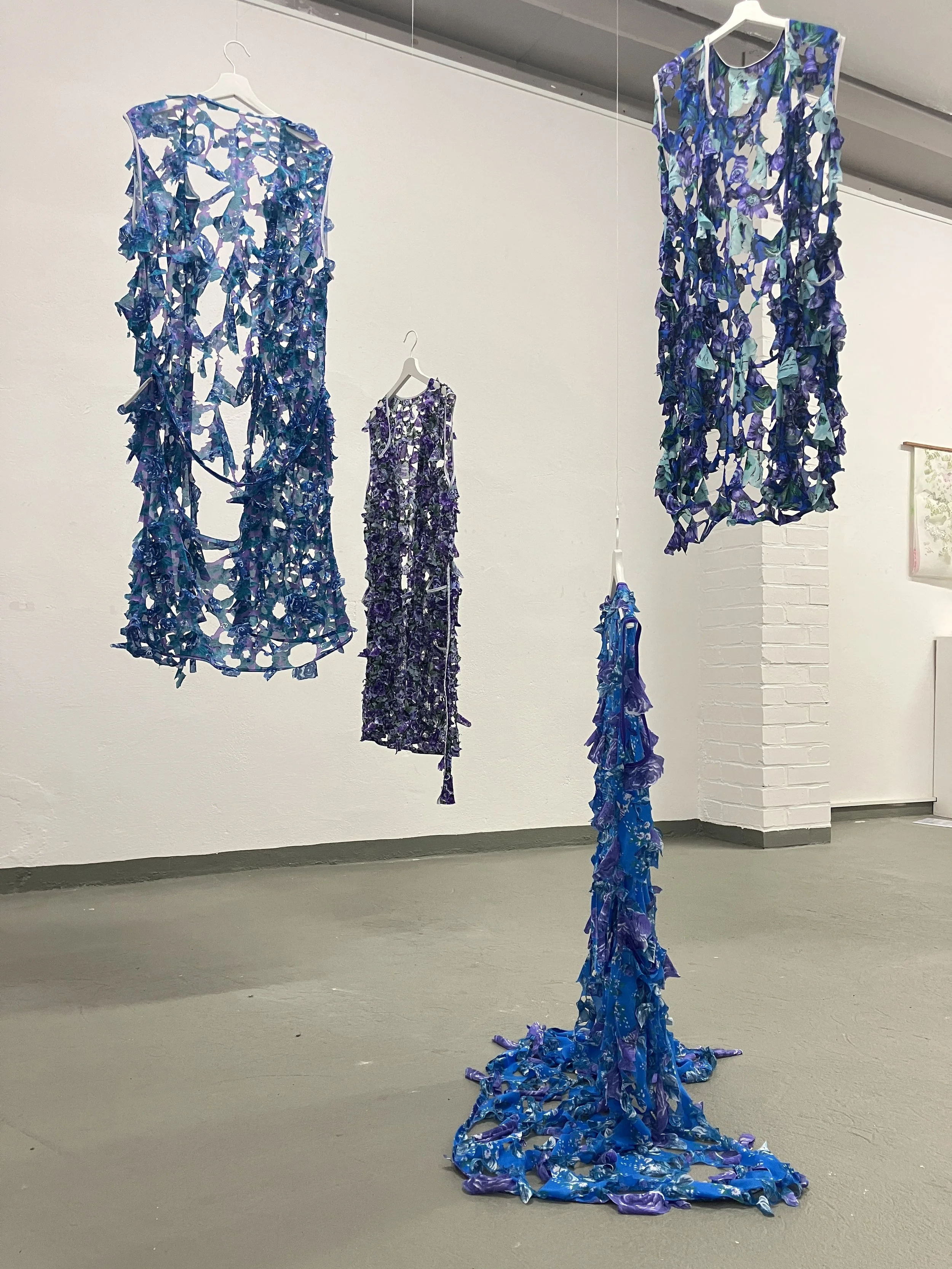
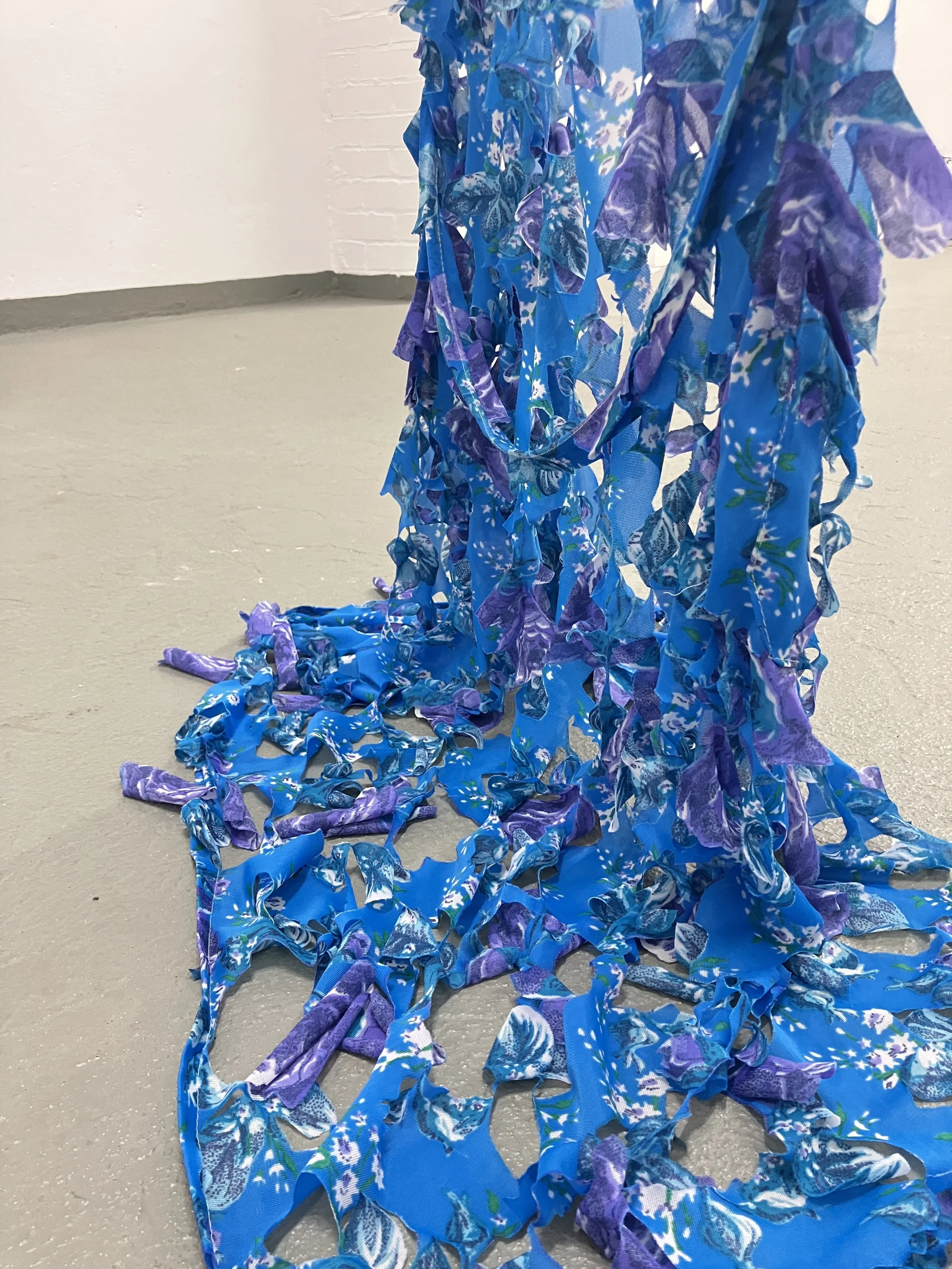
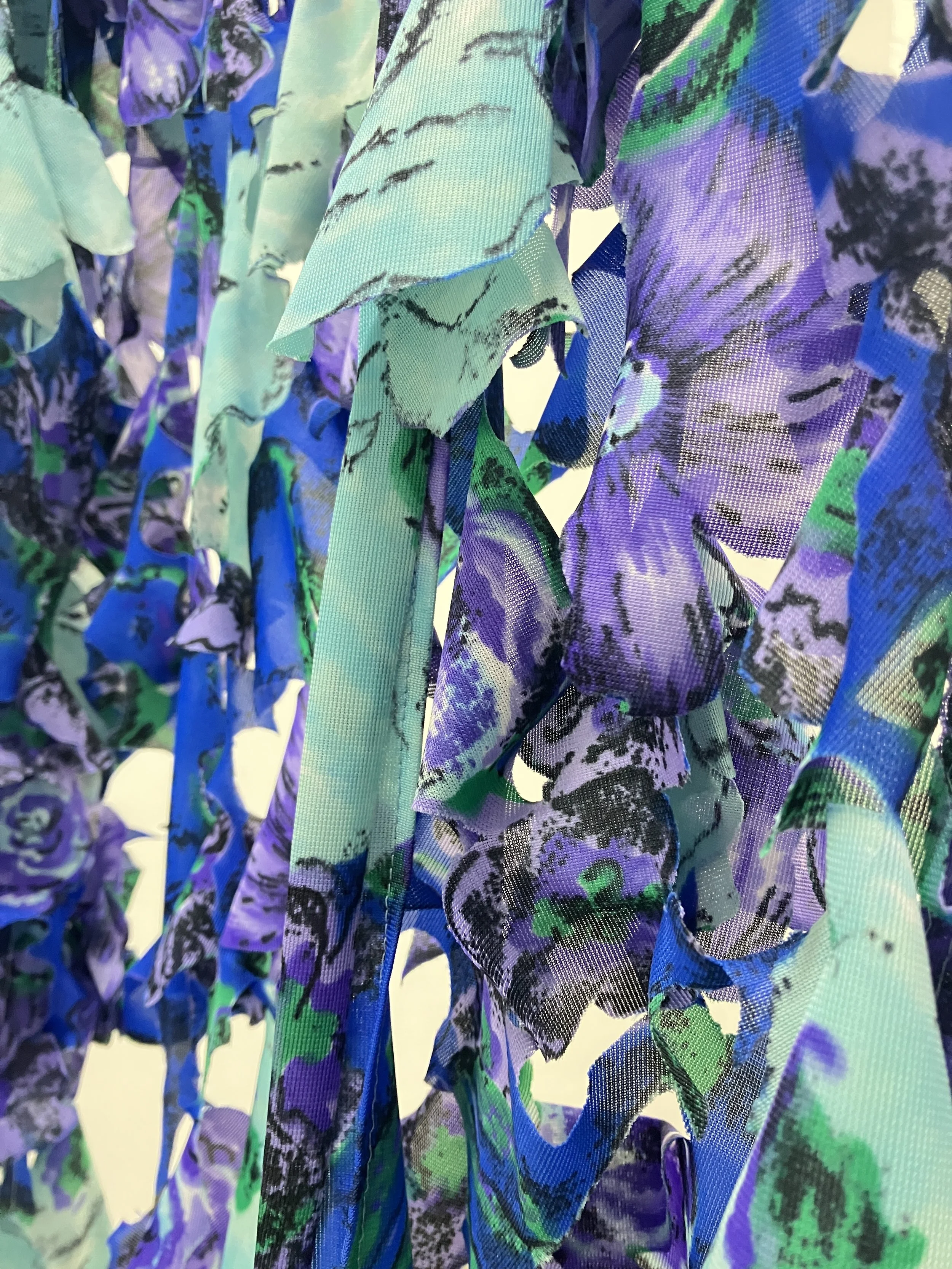
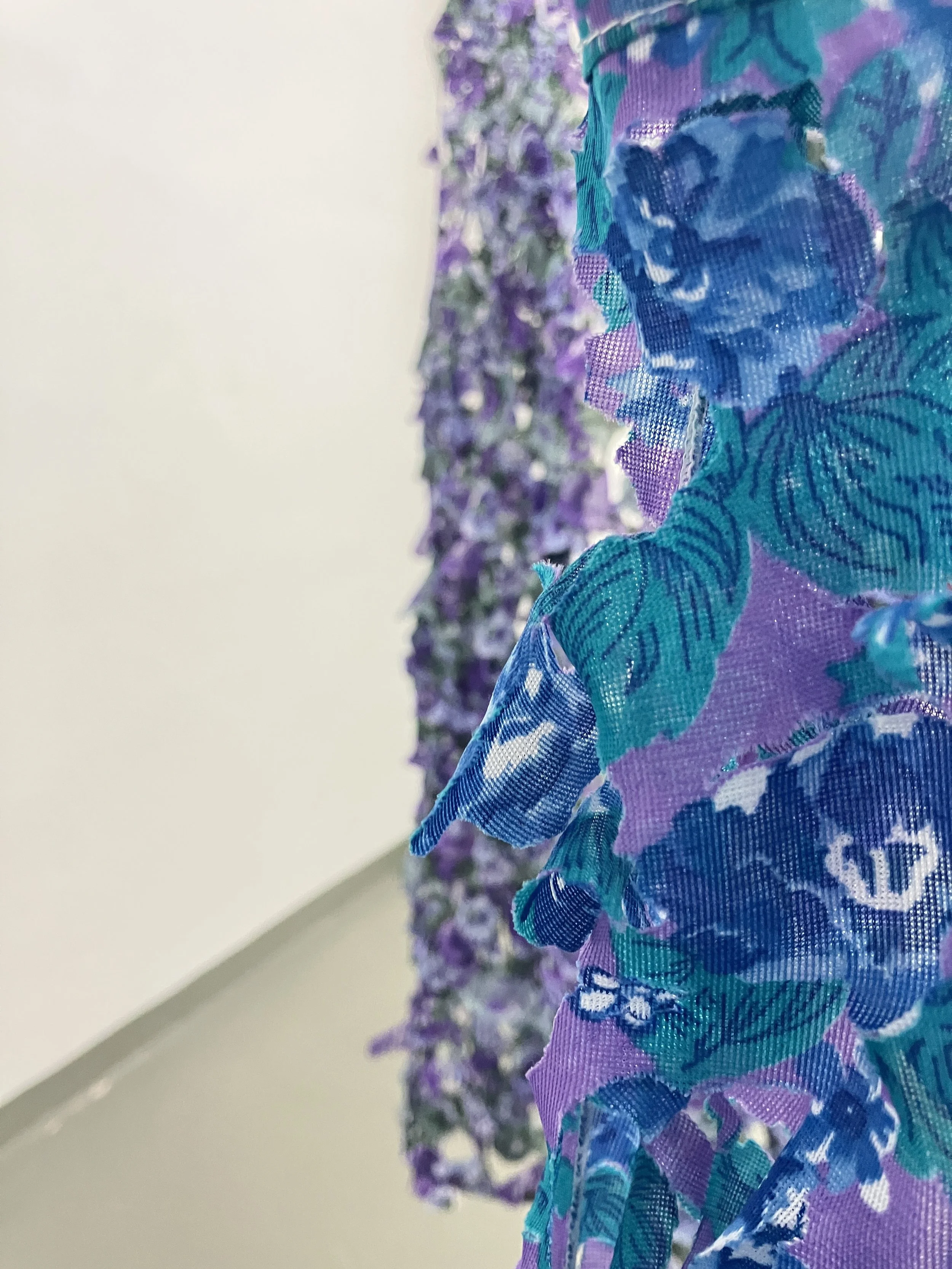
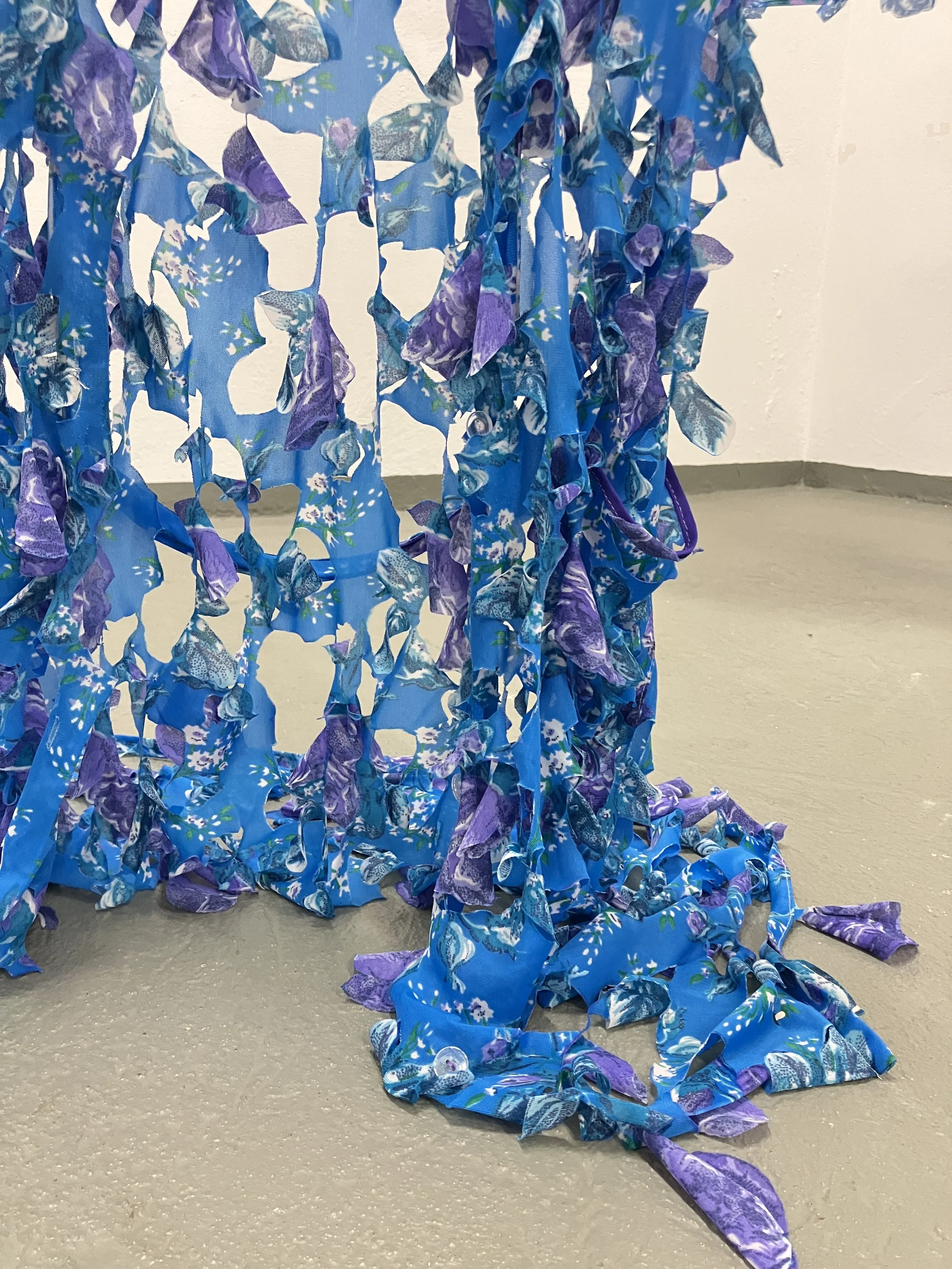
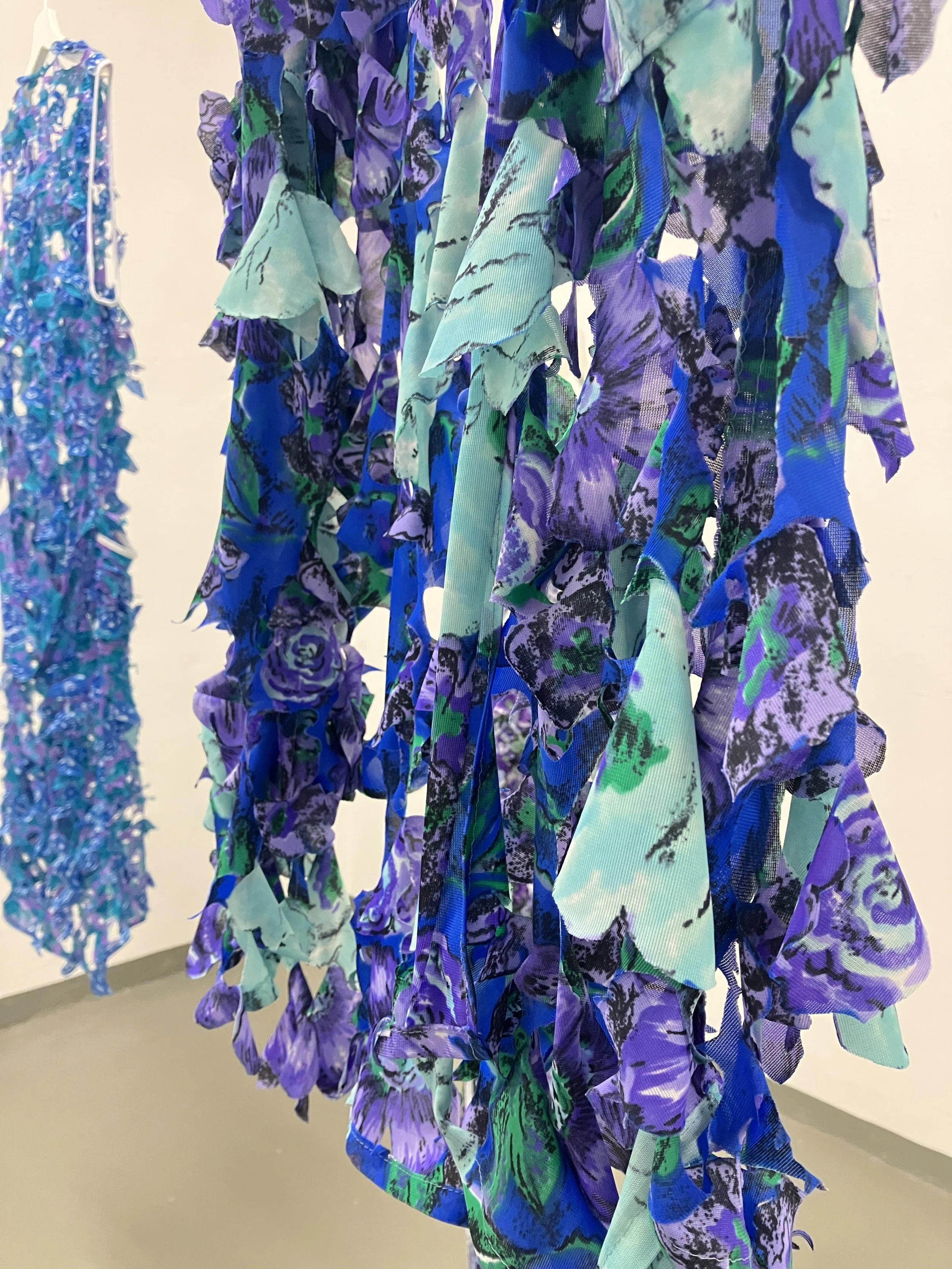
Installation: 4 Kittelschürzen/Dederon, manuelle Cut-outs auf Holzbügel, je ca. 100x50 cm
Installation: Smock aprons/Dederon, hand-cut cut-outs on wooden hangers, each approx. 100x50 cm
(…) „und dann taucht Martha auf“. Blumen.
Der Rüstungscharakter eines Arbeitskittels entblättert sich, wird zum Duft in Gedanken. Bleibt Arbeit im Rhythmus. (…)
Text: Rico. (Auszug aus der Rede zur Eröffnung von strömen 2026)
Die Kittelschürze ist mehr als ein Kleidungsstück, vielmehr ist sie ein historisches Symbol für weibliche Erwerbs- und Hausarbeit. Im Ersten Weltkrieg in den USA erfunden, wurde sie nach dem Zweiten Weltkrieg in Europa allgegenwärtig. Verbunden mit der Generation des Wiederaufbaus – mit oft unbezahlter Arbeit von Frauen im Haus, der Landwirtschaft und Fabrik – mit Hygiene und Fleiß.
Durch Vielfarbigkeit und variierenden Blümchen- oder Karomustern ermöglichte sie, als Uniform gedacht, Ausdruck von Individualität.
Die Kittelschürze der DDR aus Dederon gefertigt, war bügelfrei, pflegeleicht und unkaputtbar. Sie war Massenprodukt, Arbeitskleidung und das Symbol der Alltagskultur.
Heute taucht sie unter dem #kittelschürze in den sozialen Medien auf – zwischen Nostalgie und IT-Piece.
In „… und dann taucht Martha auf“ lösen sich die Blumen aus dem Ursprungsstoff und treten in eine neue Beziehung zu ihrer Umgebung. Die Kittelschürze verändert ihre Gestalt, ursprüngliche Konturen und Grenzen verschwimmen.
Persönliche Erinnerungen verweben sich mit einer übergeordneten Erzählung über Materialität, Natur und Wahrnehmung.
(…) “and then Martha appears.” Flowers.
The armor-like nature of a work coat sheds its layers, transforming into a scent within the mind. Yet the work persists, maintaining its rhythm. (…)
Text: Rico. (excerpt from the opening speech of strömen 2026)
The housecoat is more than just a garment; it's a historical symbol of women's paid work and domestic labor. Invented in the USA during World War I, it became ubiquitous in Europe after World War II. It's associated with the reconstruction generation—with the often unpaid work of women in the home, agriculture, and factories—with hygiene and diligence.
Through its many colors and varying floral or plaid patterns, it allowed for the expression of individuality, even though it was intended as a uniform.
The East German housecoat, made of Dederon, was wrinkle-free, easy to care for, and virtually indestructible. It was a mass-produced item, workwear, and a symbol of everyday culture.
Today, it appears on social media under the hashtag #kittelschürze (housecoat)—a blend of nostalgia and trendy fashion statement.
In "...and then Martha appears," the flowers detach themselves from the original fabric and enter a new relationship with their surroundings. The housecoat changes its form; its original contours and boundaries blur.
Personal memories intertwine with an overarching narrative about materiality, nature, and perception.
Text: Mirjam Elburn
Bilder | Images: Mirjam Elburn