harbour, 2023/24
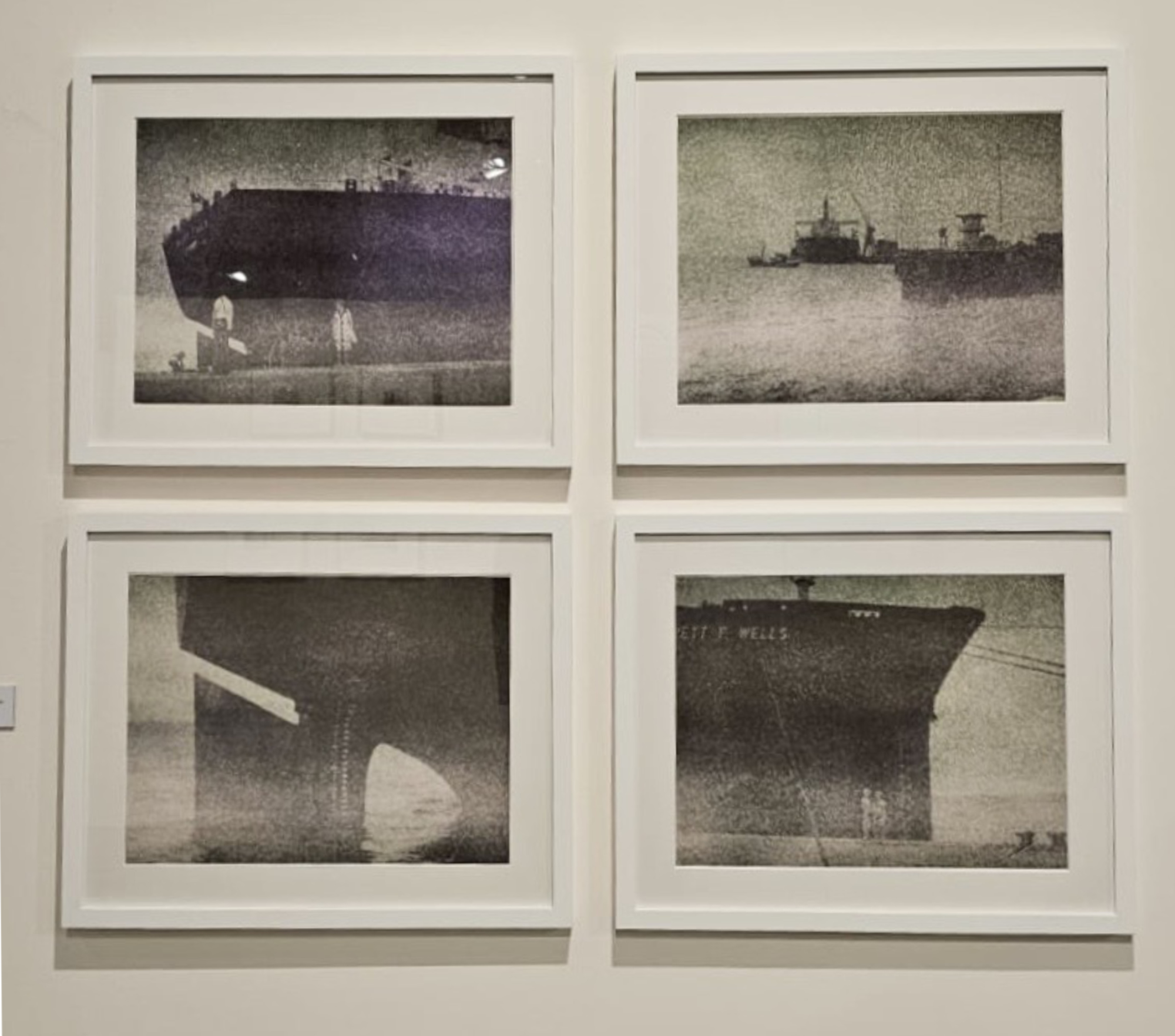
harbour (Heimat ist ein fremdes Land), analoge Farbfotografie/Abzug auf Hahnemühle Photo Rag, 30×40 cm
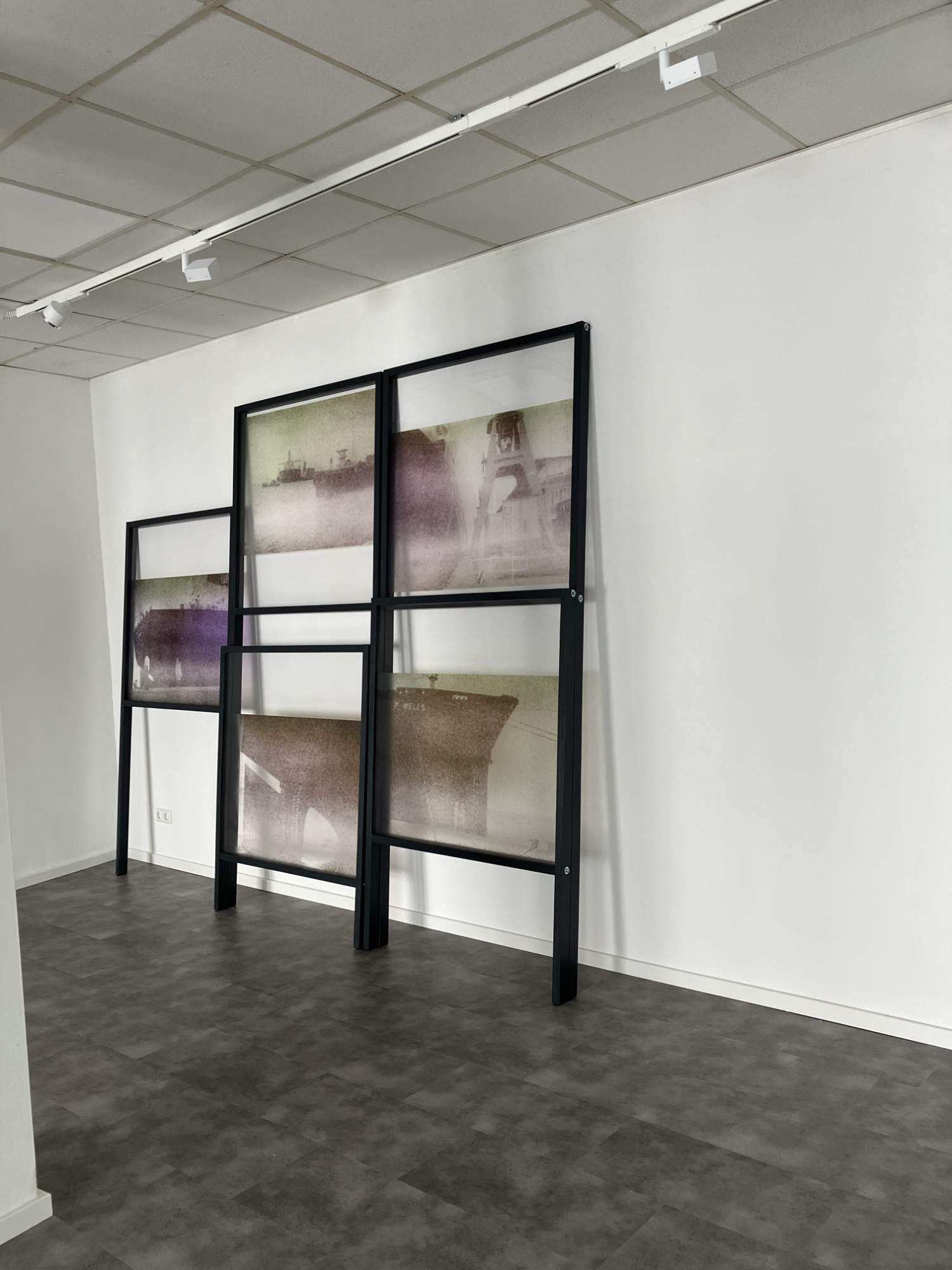
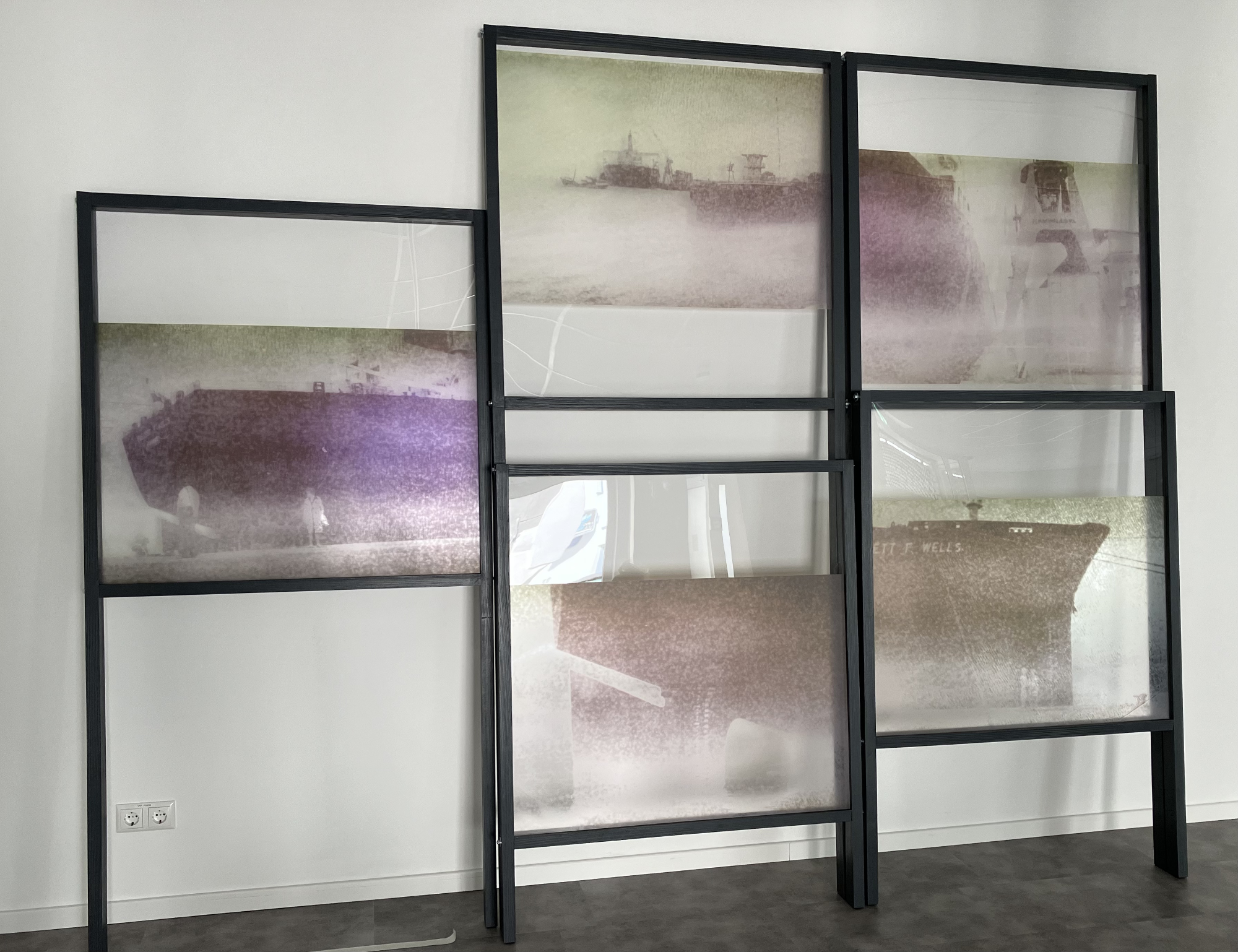
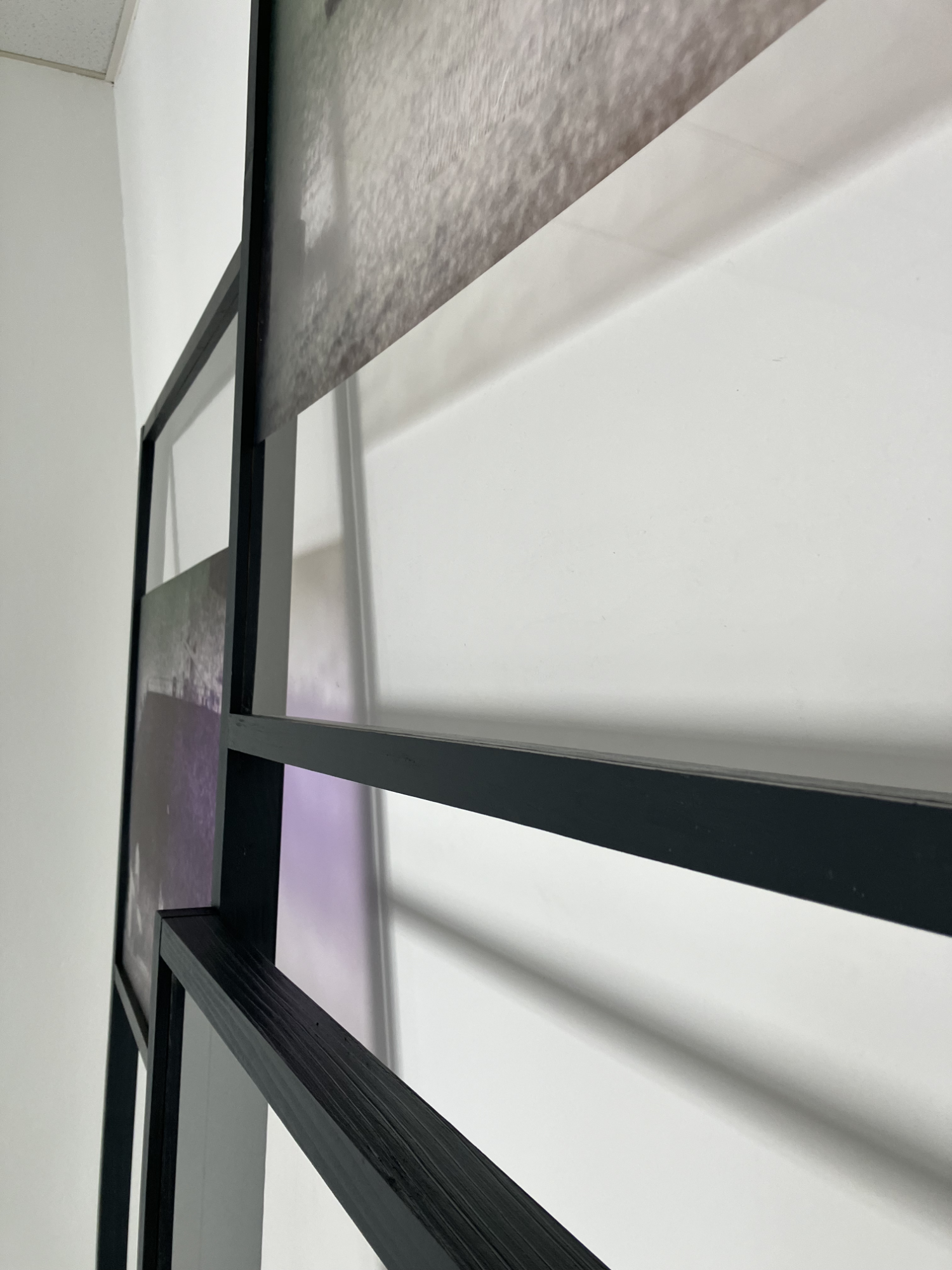
harbour (anlegen und auslaufen), analoge Farbfotografie übertragen in großformatigem Digitaldruck auf 5 Acrylplatten im Holzgestell, 250×300 cm
harbour (home is a foreign land)(dock and sat sail), analogue colour photography/print on Hahnemühle Photo Rag, 30×40 cm
harbour (dock and sat sail), analogue colour photography transferred in large-format digital printing on 5 acrylic panels in a wooden frame, 250×300 cm
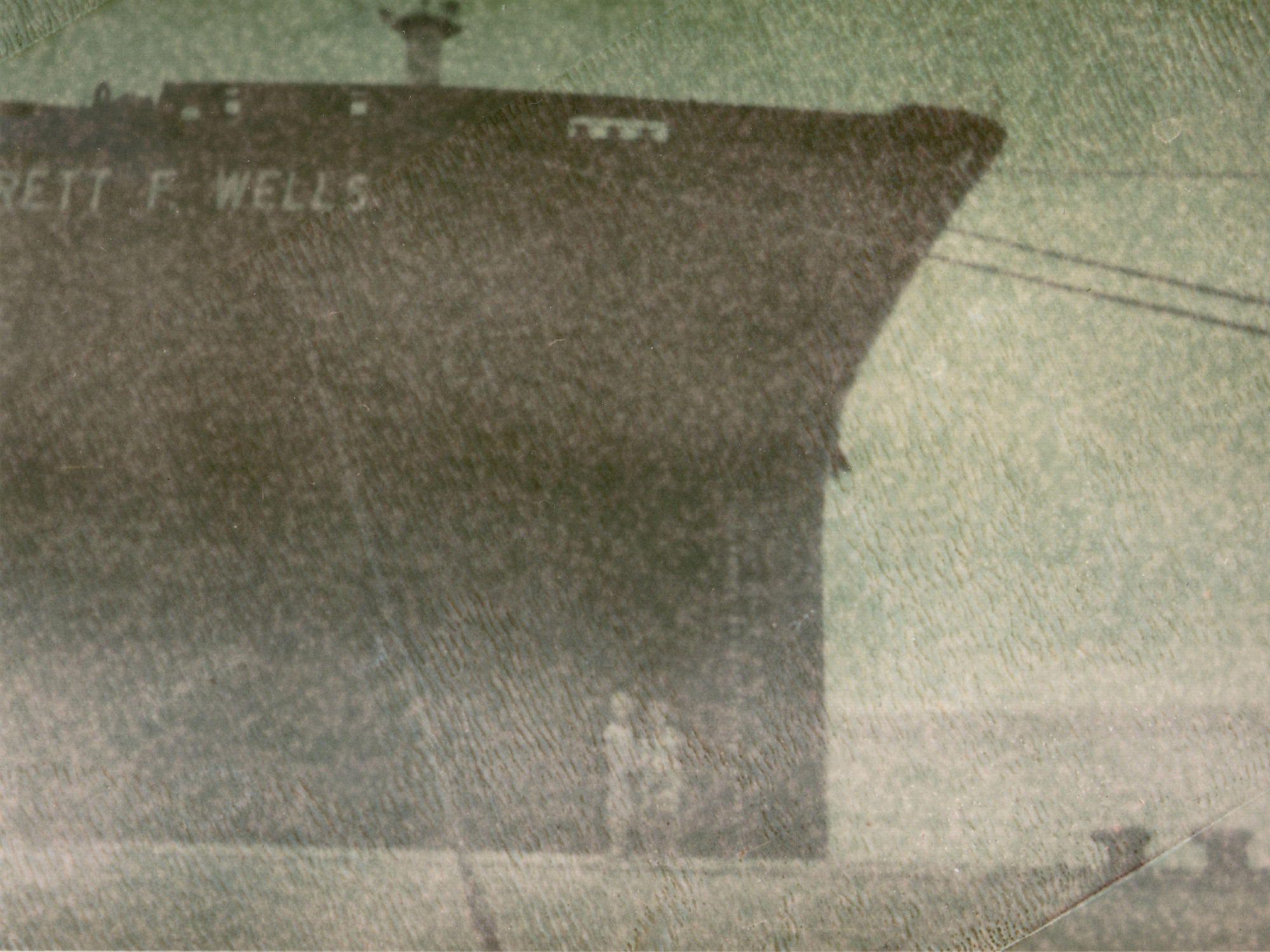
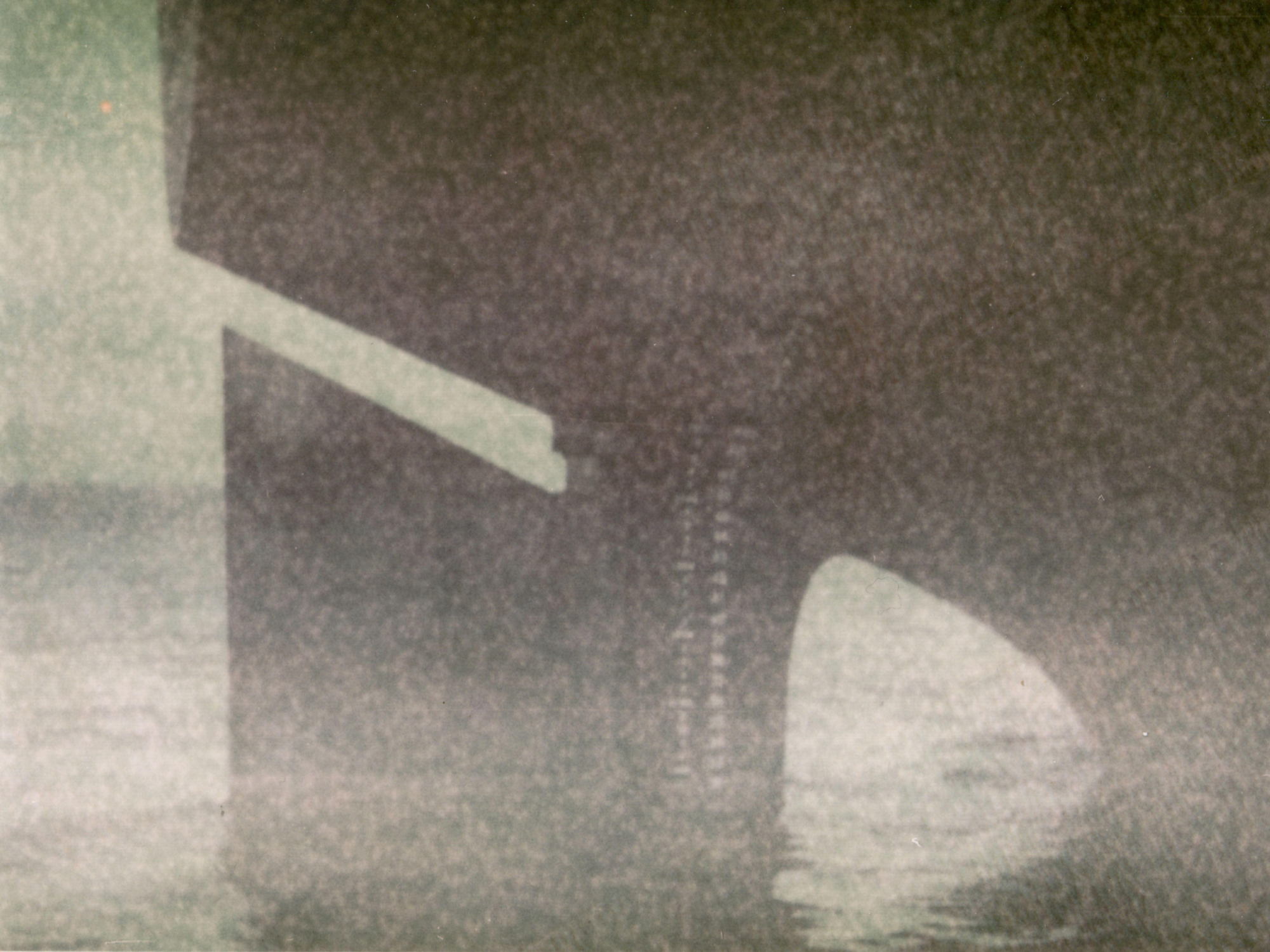
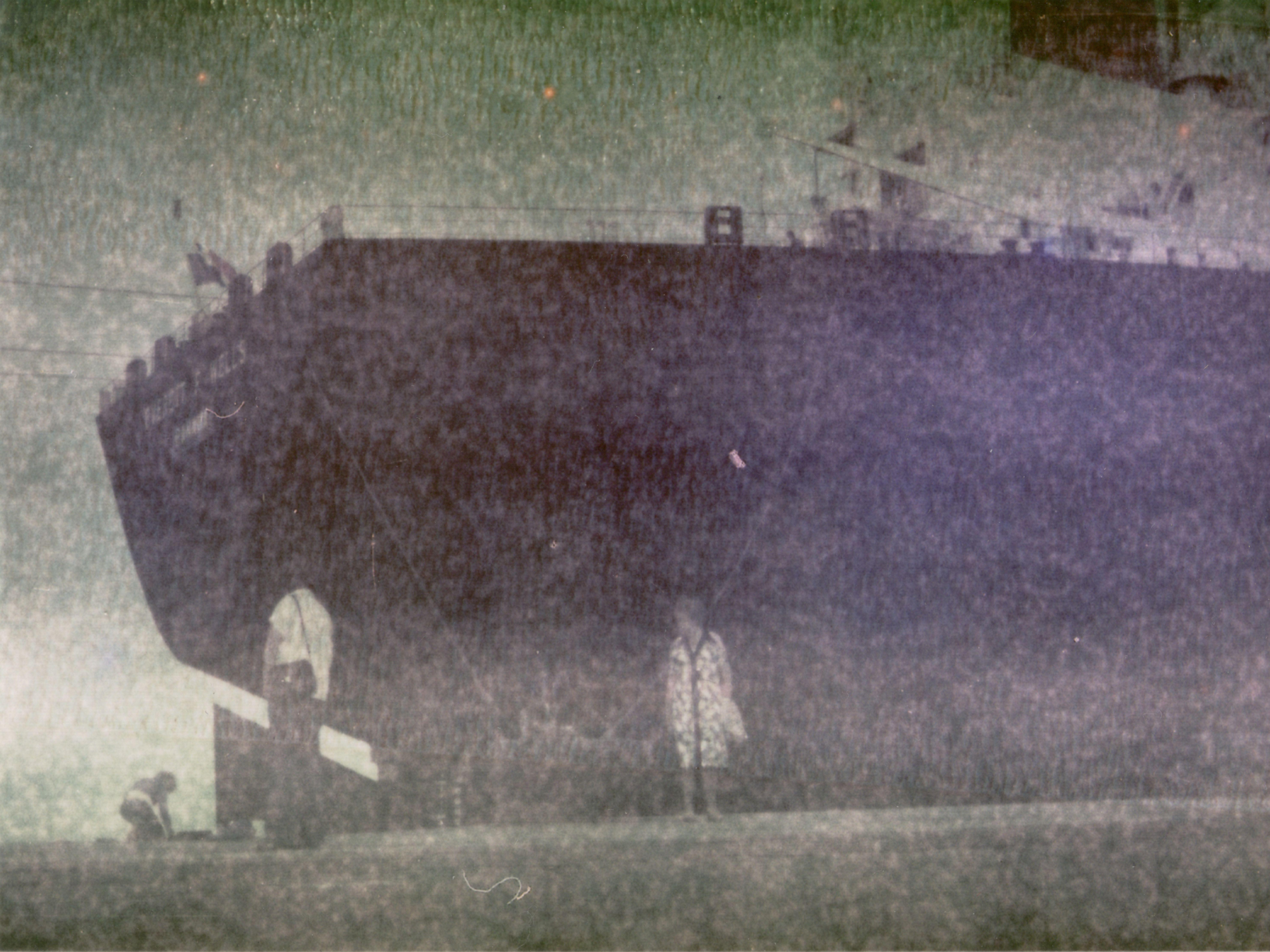
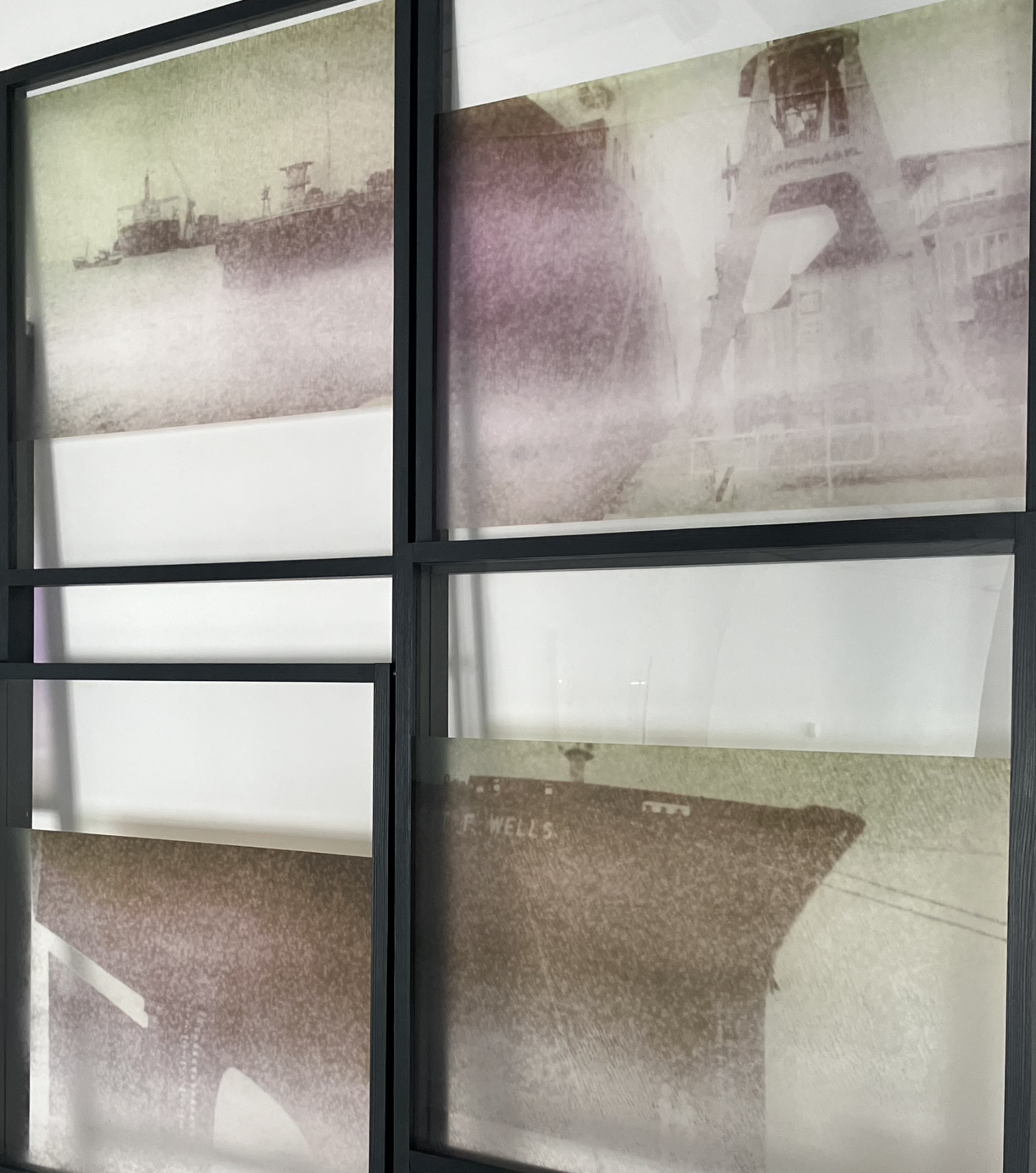
Die Installation basiert auf fotografischem Fundmaterial: einer Filmnegativrolle aus einer auf dem Flohmarkt erworbenen analogen OPTIMA II. Der Film verweilte von der Aufnahme bis 2023 in der Kamera, als ich ihn entwickelte und Abzüge auf Papier anfertigte. Die Bilder stammen aus den späten 1970er Jahren und zeigen vor allem den Supertanker Everett F. Wells, der 1976/77 in Wallsend/Tyneside gebaut wurde.
harbour (anlegen und auslaufen) hinterfragt anhand dieser zufällig gefundenen Bilder Autorschaft, Kontrolle und den Reiz des Gefundenen – im Kontrast zur unendlichen Bildproduktion einer simultanen, digitalen Welt, in der wir ständig und überall fotografieren. Die Bilder vermitteln sowohl Sehnsuchtsorte als auch Momente der Bewunderung für technische Dimensionen im Verhältnis zu den abgebildeten Personen. Der bevorstehende Niedergang der Schiffsindustrie und die gesellschaftlichen Folgen sind nicht sichtbar; es entsteht der Eindruck, einem historischen Ereignis aus einer privaten Perspektive beizuwohnen. Der Kontext bleibt fragmentarisch: Wer hat das Bild wann, wo und warum gemacht? Durch die visuelle Aneignung und Weiterverarbeitung des fremden Blicks erzähle ich eine neue, spekulative Geschichte.
Die Undeutlichkeit des fast verlorenen Materials, kombiniert mit dem Druck auf transparente Platten – ein Dialog zwischen analogem und digitalem Prozess – verstärkt den Eindruck von Materialität und Sphärischem. Der Tanker ist längst verschrottet, die Personen deutlich gealtert oder möglicherweise verstorben. Meine Recherche zum Bildmotiv führte unter anderem zu Christopher David Killip (1946–2020), der den Stapellauf des Supertankers fotografierte (Launch of the supertanker, Everett F. Wells, 1976)
The installation is based on found photographic material: a roll of film negatives from an analog Optima II acquired at a flea market. The film remained in the camera from the time it was taken until 2023, when I developed it and made prints on paper. The images date from the late 1970s and primarily depict the supertanker Everett F. Wells, built in Wallsend/Tyneside in 1976/77.
Using these randomly found images, harbour (docking and sailing) questions authorship, control, and the allure of the found—in contrast to the endless image production of a simultaneous, digital world in which we photograph constantly and everywhere. The images convey both places of longing and moments of admiration for technical dimensions in relation to the people depicted. The impending decline of the shipping industry and its societal consequences are not visible; the impression arises of witnessing a historical event from a private perspective. The context remains fragmentary: Who took the picture, when, where, and why? Through the visual appropriation and further processing of this stranger's perspective, I tell a new, speculative story.
The indistinctness of the almost lost material, combined with the printing on transparent plates—a dialogue between analog and digital processes—reinforces the impression of materiality and the spherical. The tanker has long since been scrapped, the people visibly aged or possibly deceased. My research on the image led me, among others, to Christopher David Killip (1946–2020), who photographed the launch of the supertanker (Launch of the supertanker, Everett F. Wells, 1976).
Text: Mirjam Elburn
Bilder | Images: Mirjam Elburn