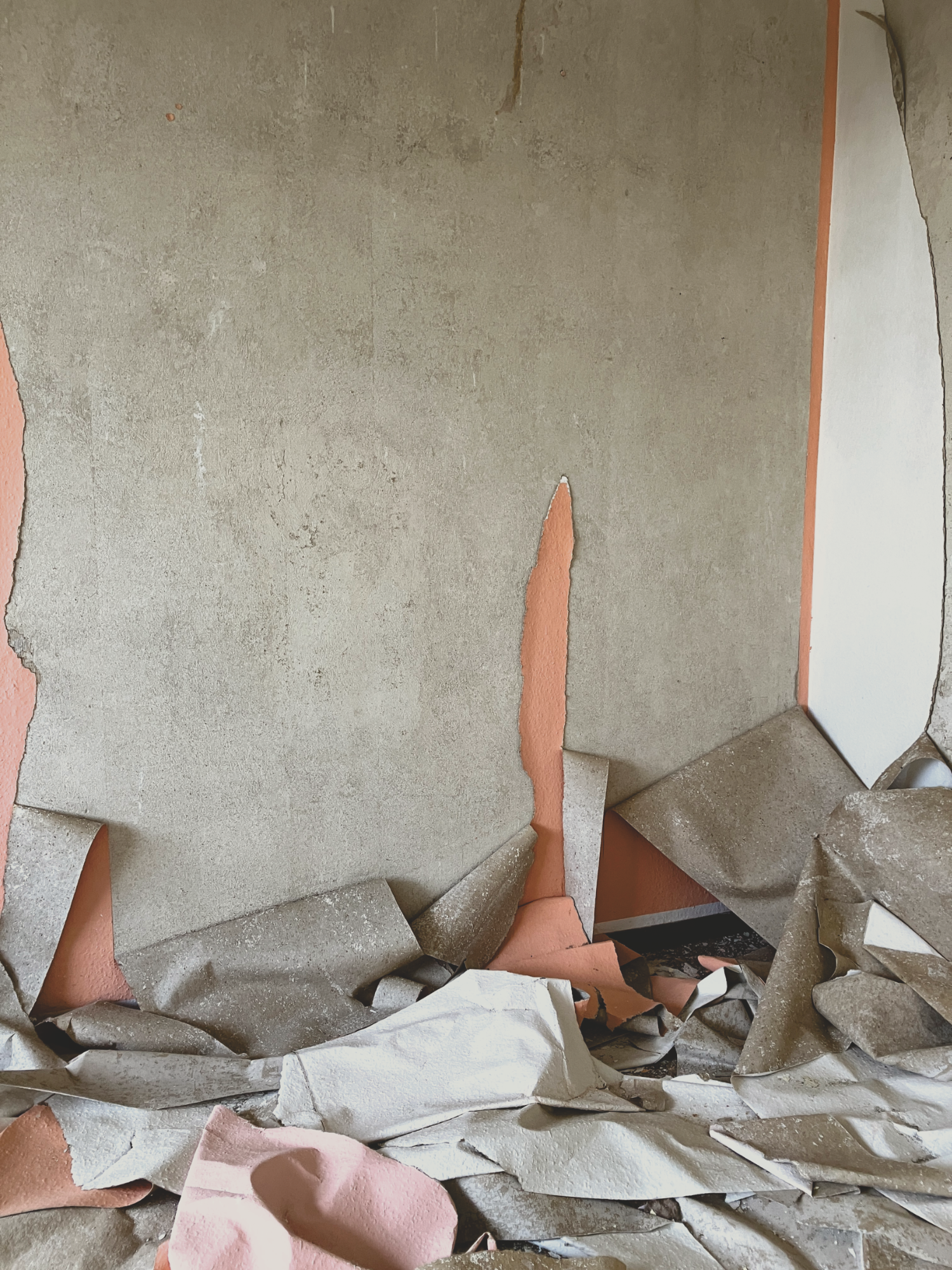
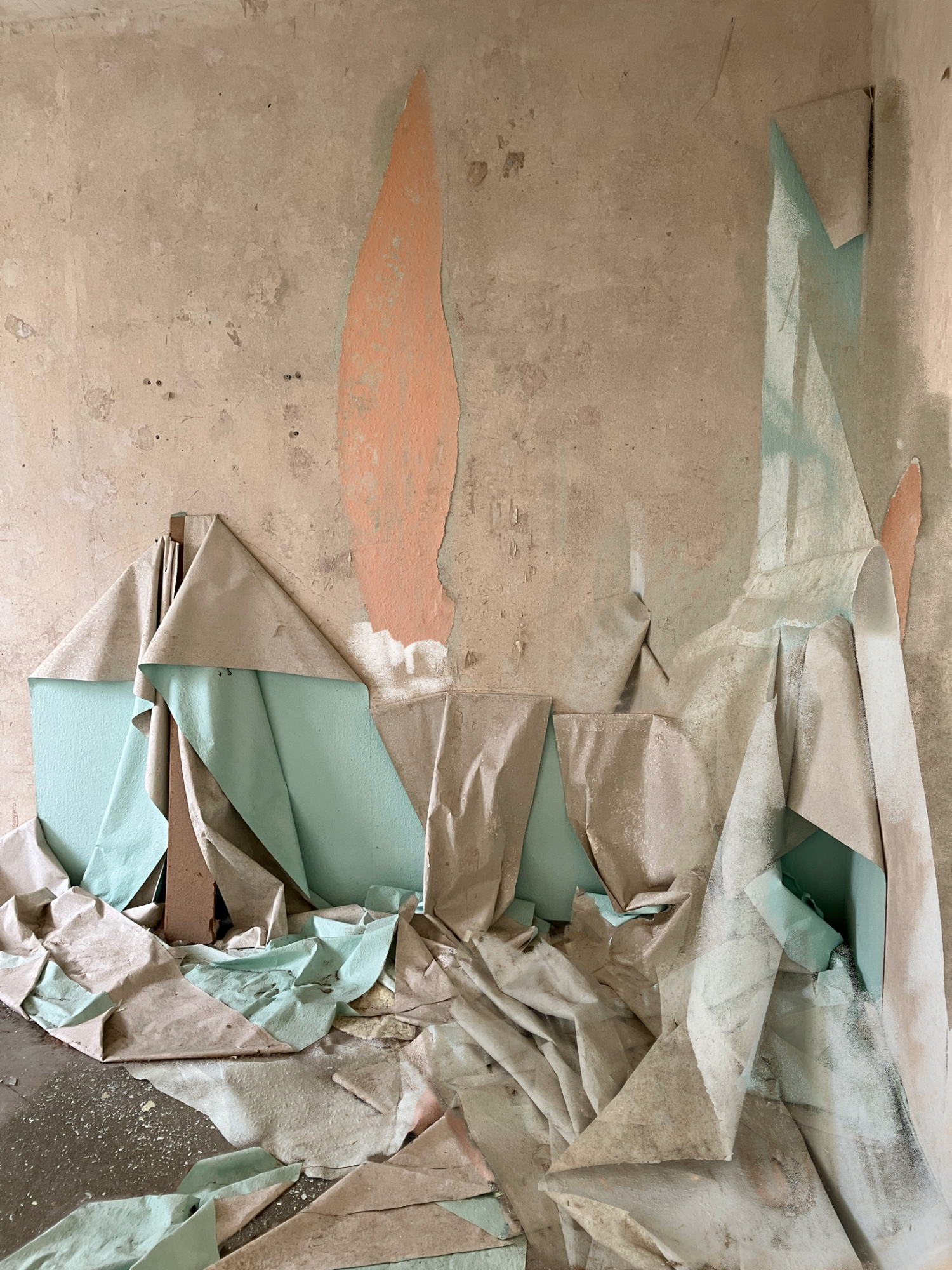
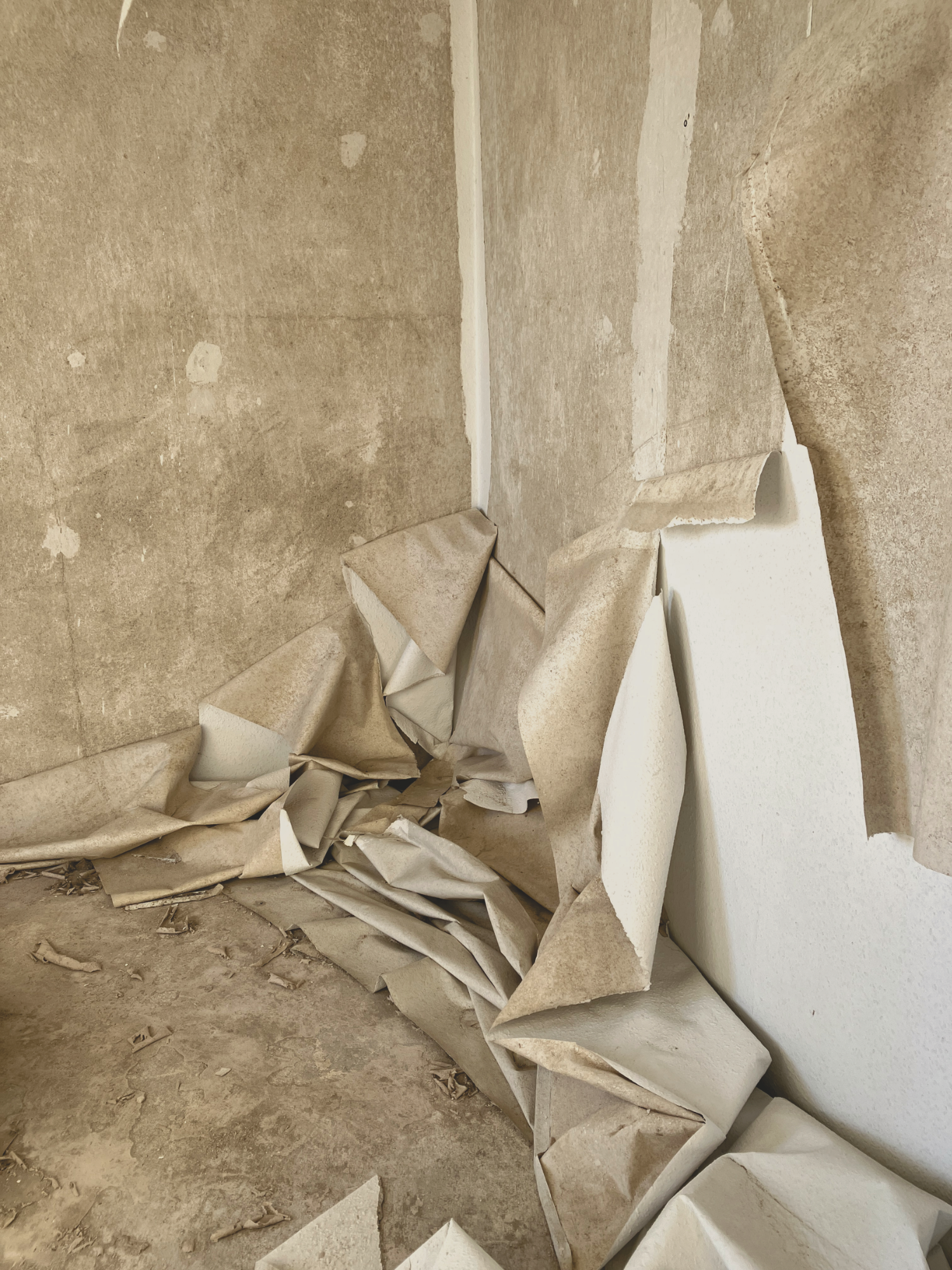
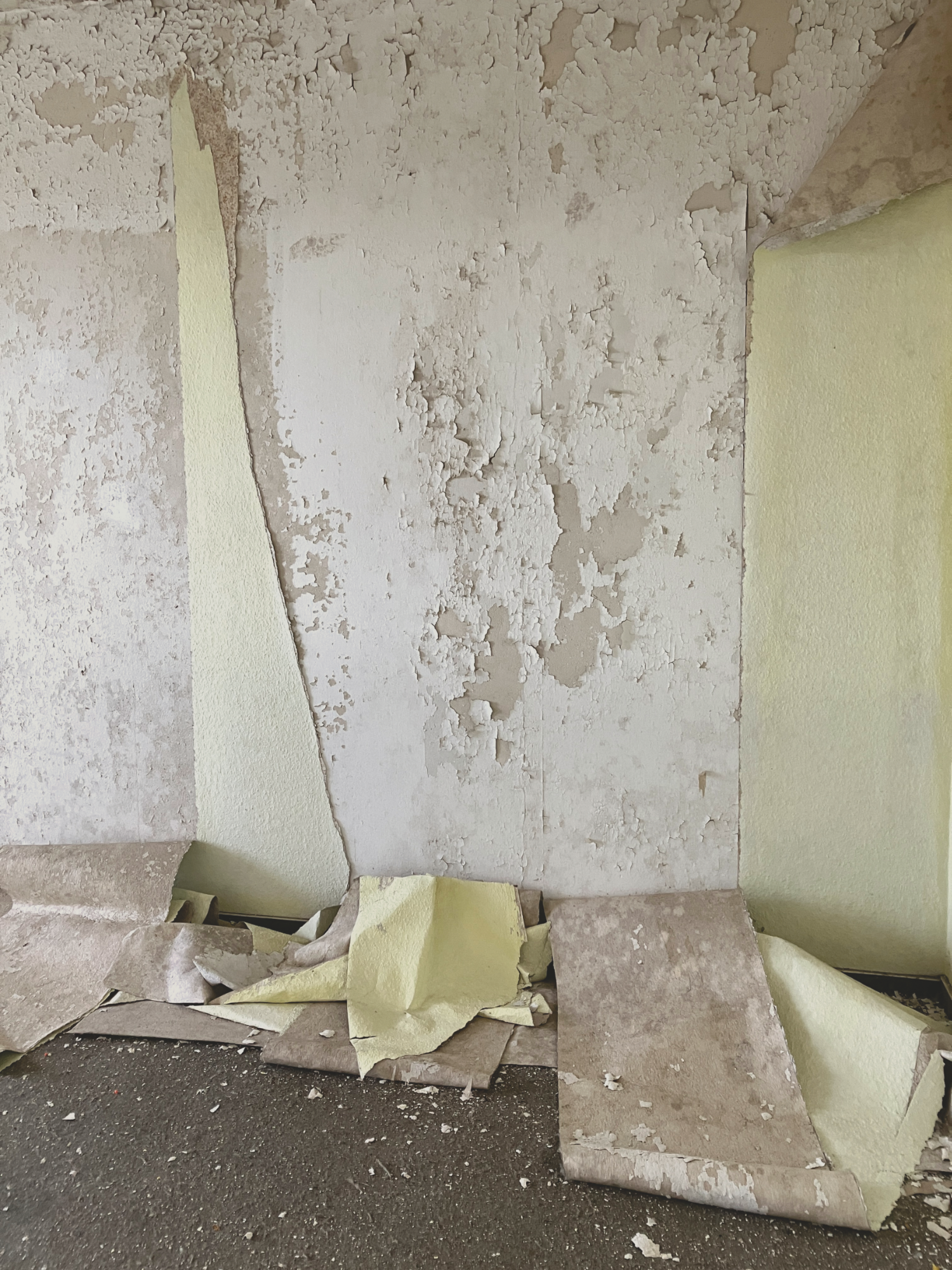
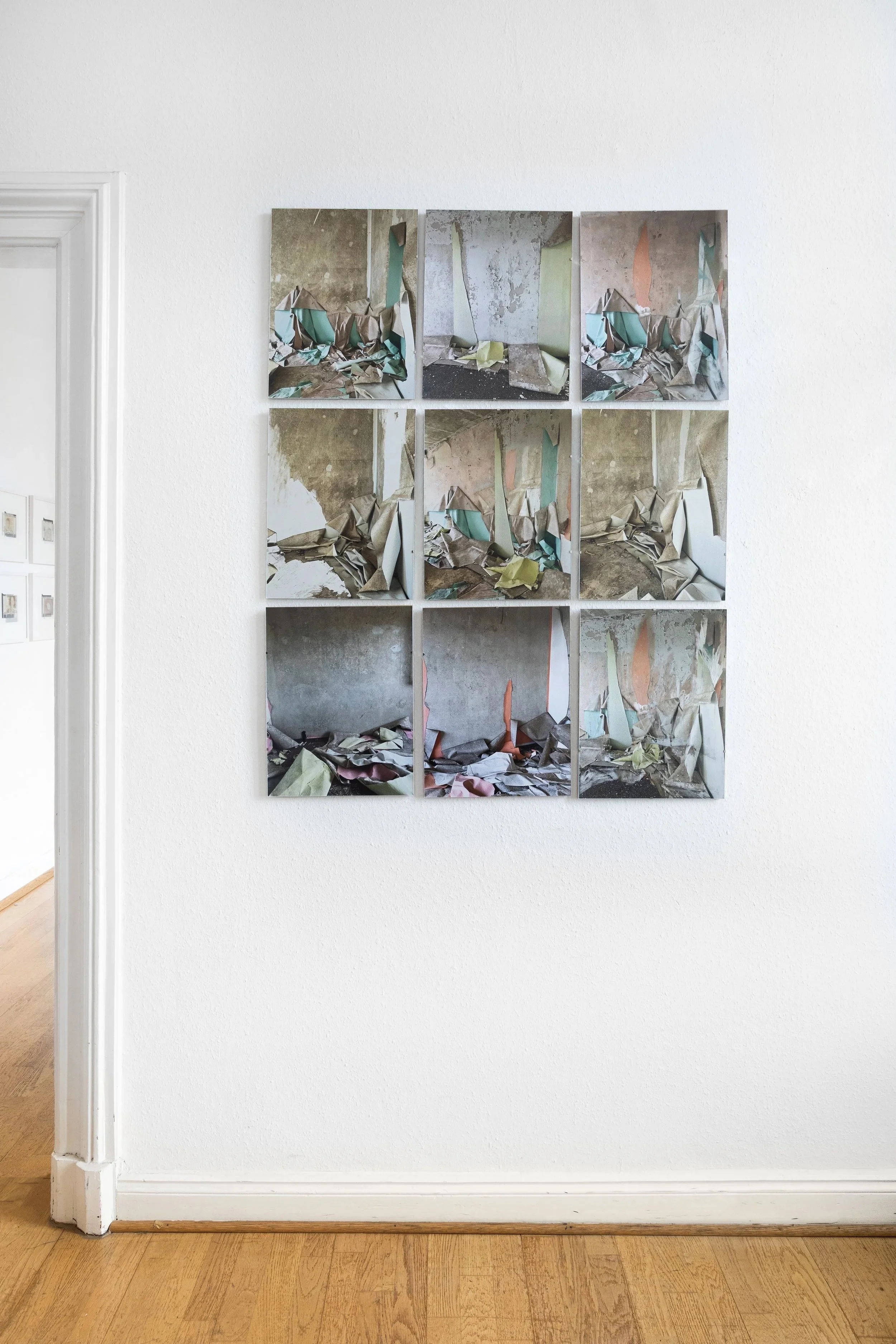
„… ich wohne/lebe in Möglichkeiten” (Emily Dickinson, Nr. 466), 2025
Serie von 13 digitalen Fotografien, teilweise digital überlagert/Collage, je 13 Abzüge + 1 AP, Pigmentdruck auf Hahnemühle Photo Rag, 40×30 cm
Series of 13 digital photographs, some digitally superimposed/collage, 13 prints + 1 artist's proof, pigment print on Hahnemühle Photo Rag, 40×30 cm
In ihrem Gedicht Nr. 466 verwendet Emily Dickinson die Metapher des Hauses, um die Vorstellungskraft und die Welt der Möglichkeiten zu symbolisieren. Ein Haus ist nicht nur ein Ort des Wohnens, sondern auch ein Ort des Denkens und der Fantasie. Der Mensch hat die Fähigkeit, die Grenzen der physischen Welt zu überwinden und in einer Welt der Möglichkeiten zu existieren, die Vorstellungskraft ist ein mächtiges Werkzeug.
Die Fotografien sind in Basepohl am See/MV aufgenommen, in einer Siedlung ehemals bestehend aus 7 großen Plattenbauten, die mit Bau der Kaserne ab 1972 auf Bodenreformland für 210 Familien gebaut wurde. Sie diente der Unterbringung von den in der nebenan gelegenen NVA-Kaserne Tätigen und deren Familien. Es gab einen Wohnheim-Block für die ledigen Angehörigen der Luftverteidigung, eine Kindergrippe, einen Kindergarten, eine Poststelle, ein Versorgungszentrum mit Kaufhalle, eine Arztpraxis, eine Gaststätte und eine kleine Bibliothek. Die Wohnblöcke waren aus Geheimhaltungsgründen den stationierten Einheiten entsprechend zugeteilt.
Die 3- und 4-Raumwohnungen waren großzügig aufgeteilt, vollgeflieste Bäder, alle mit Balkon, der Ausstattungsgrad weit über DDR-Standard. Mit Ende der NVA 1990 übernahm die Bundeswehr das Gelände, gab es aber 2015 auf. Die letzten Mieter zogen aus und die Siedlung wurde dem Verfall überlassen. Bis auf die reinen Wohnblöcke wurden u. a. Kaufhalle und Kindergarten abgerissen. Diese liegen nun wie eine Geisterstadt am See.
In her poem No. 466, Emily Dickinson uses the metaphor of the house to symbolize imagination and the world of possibilities. A house is not only a place to live, but also a place of thought and imagination. Human beings have the capacity to transcend the limitations of the physical world and exist in a world of possibilities; imagination is a powerful tool.
The photographs were taken in Basepohl am See/MV, in a settlement formerly consisting of seven large, prefabricated apartment blocks, built on land reform land starting in 1972, coinciding with the construction of the barracks. It was intended to house 210 families. The settlement served as accommodation for those stationed at the adjacent National People's Army (NVA) barracks and their families. It included a dormitory block for unmarried members of the air defense forces, a crèche, a kindergarten, a post office, a supply center with a supermarket, a doctor's office, a restaurant, and a small library. For reasons of secrecy, the apartment blocks were assigned according to the stationed units.
The three- and four-room apartments were generously proportioned, with fully tiled bathrooms, all with balconies, and a level of finish far exceeding GDR standards. With the end of the National People's Army (NVA) in 1990, the German Federal Armed Forces (Bundeswehr) took over the site but abandoned it in 2015. The last tenants moved out, and the complex was left to decay. Apart from the apartment blocks themselves, the supermarket and kindergarten, among other buildings, were demolished. These now stand like a ghost town by the lake.
Text: Mirjam Elburn
Bilder | Images: Hannes Woidich, Mirjam Elburn